
The Other Survivor
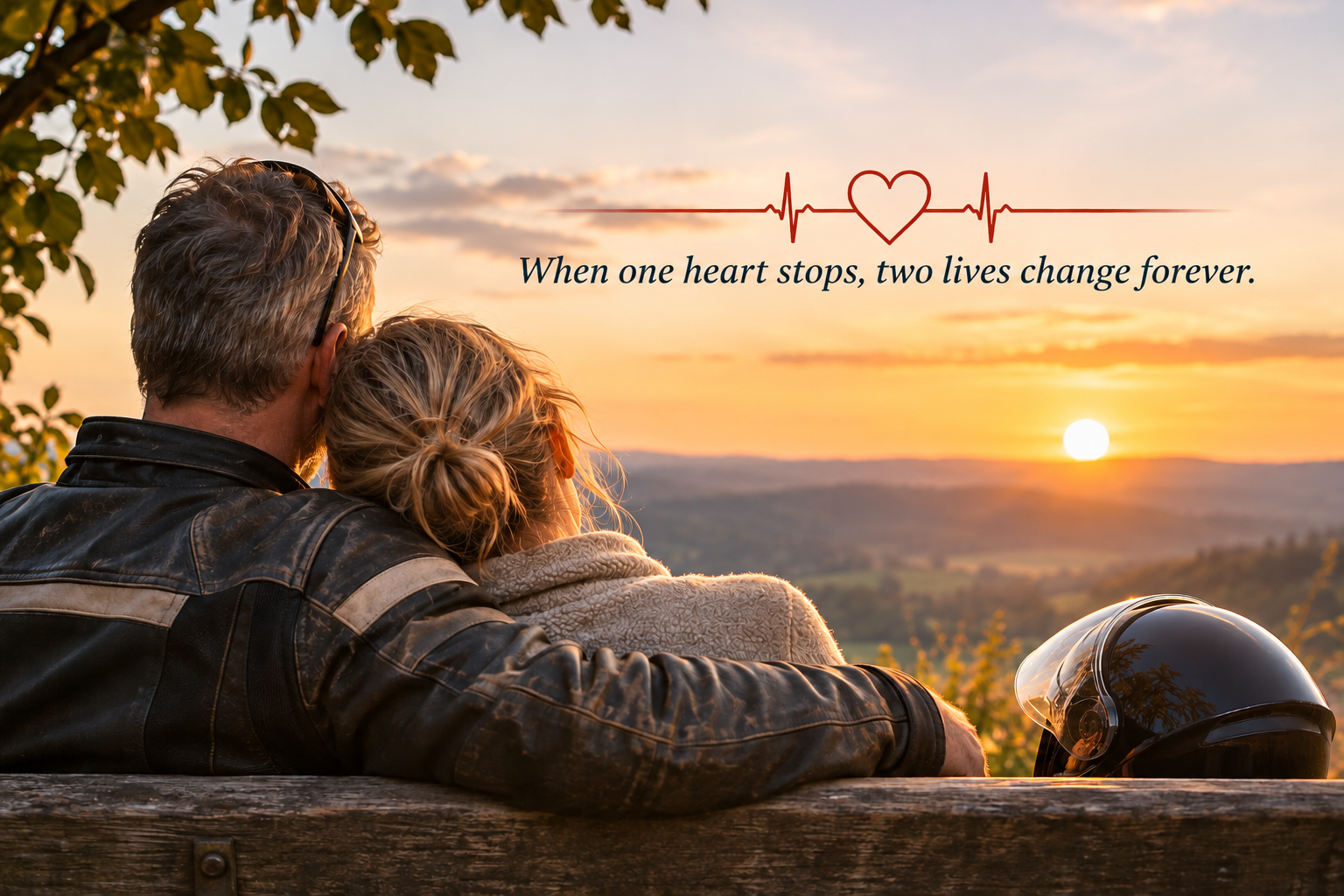
When one heart stops, two lives change forever.
On 30 May 2020, my wife and I were walking home from her parents’ place. We were having an ordinary conversation when I suddenly told her that I wasn’t feeling well.
And then, nothing.
For me, that is where the story stops. I lost consciousness, suffered a sudden cardiac arrest, and spent the following days in a coma. I have virtually no recollection of those first weeks.
For my wife, however, that is where the story begins.
When we talk about surviving a sudden cardiac arrest, we naturally focus on the person whose heart stopped. But there are other survivors, too. The partners and loved ones who witnessed everything, lived through the uncertainty, and were left to deal with their own fears long after the immediate danger had passed.
She initially thought I was having some sort of epileptic attack. But it quickly became apparent that something was terribly wrong. I was lifeless. She panicked, cried for help, and called the emergency services. Following their instructions, she did everything she could to keep me alive.
Seconds must have felt like minutes. Minutes like hours.
She has told me several times since that day that she simply refused to become a widow.
And somehow, against considerable odds, she didn’t.
But what followed was hardly reassuring. The doctors managed to stabilise me, only for me to suffer another cardiac arrest in hospital the following day. They couldn’t tell her whether I would survive, whether I would ever wake up, or what condition I might be in if I did.
Would I recognise her? Would I still be the person she knew? Would I have suffered permanent brain damage?
Imagine having to live with those questions, without knowing when, or even if, you would ever get an answer.
I was unconscious through much of this. She wasn’t.
And that is something I have come to understand much better over the years.
Two very different recoveries
When I eventually woke up and started to understand what had happened, I had quite enough to deal with myself.
I was incredibly weak, exhausted, confused, and struggling to comprehend that my heart had stopped and that I had almost died.
My attention was focused on recovering. Physically, mentally, emotionally. Just getting through the day was sometimes an achievement.
My wife, meanwhile, had already been through an experience that I couldn’t even remember.
And she had barely had time to process it before she had to start taking care of me.
For weeks and months, she essentially put her own life on hold. She looked after me, managed the household, and remained almost permanently by my side.
Patient. Compassionate. Caring.
And frightened.
We were both frightened, of course, but in different ways.
I remember waking up in the middle of the night, opening my eyes, and finding her face just above mine.
She had noticed that my breathing had slowed and was checking whether I was still alive.
Imagine that.
Going to sleep next to the person you love, but being unable to fully relax because you’re afraid they might not wake up again.
Every unusual noise I made, every effort, every movement that seemed slightly out of the ordinary could put her on high alert.
I was afraid my heart might fail me again.
She was afraid of losing me.
And while I could gradually learn to understand my physical limitations, she had no way of feeling what I was feeling.
That difference became particularly apparent when I started regaining my confidence.
Cardiac rehabilitation eventually helped me understand what my body could tolerate and where my limits were. I learned that my heart could handle more than I initially dared to believe.
But she couldn’t feel that growing confidence from the inside.
She could only watch, trust, and hope.
I tried to be mindful of that. I didn’t want to frighten her unnecessarily. I understood her concerns and did my best to take them into account.
Looking back, I realise that while she was taking care of me, I was also trying, in my own limited way, to take care of her.
But who takes care of the other survivor?
There is something about the aftermath of a cardiac arrest that I believe deserves much more attention.
The medical system is understandably focused on the patient. Keeping them alive, stabilising their condition, monitoring their heart, prescribing medication, arranging follow-up appointments, and hopefully providing rehabilitation.
And thank goodness for that.
But what about the person who witnessed everything?
The person who called for help, who feared the worst, who waited for news from the hospital, and who then became a caregiver almost overnight?
Who takes care of them?
In our case, the beginning of the COVID pandemic made an already difficult situation even worse.
My cardiac rehabilitation was delayed for approximately a year because the programme had been suspended. A survivor follow-up programme was also cancelled, and when services resumed, we were unfortunately never informed by the hospital.
I received psychological support, which helped me tremendously. My wife joined me for a few sessions but eventually decided that she preferred to deal with things herself.
She is an exceptionally strong and independent woman.
Her parents were there for her, too, but she didn’t want to burden them with everything we were going through.
And she talked to me.
Was that enough?
I honestly don’t know.
At the time, I accepted that she was managing things in her own way. I was also far too occupied with my own recovery to fully appreciate what she might still be carrying.
Today, I wish the healthcare system had done more to support and guide her.
Through conversations with other survivors, support groups, and medical professionals, I’ve learned that this concern is far from unique.
There seems to be considerable agreement that too little attention is paid to the psychological consequences of cardiac arrest, particularly for partners and families.
Yet, from what I’ve experienced, meaningful change remains frustratingly slow.
Surviving a cardiac arrest is not simply a medical event affecting one patient.
It can change an entire family.
And the person who appears strongest may be the easiest one to overlook.
Learning to let go. Again.
More than six years later, things have fortunately improved considerably.
The fear has slowly subsided.
But it hasn’t disappeared.
Sometimes, it reappears in the most ordinary circumstances.
Take a walk in the woods, for example.
We both love nature and spending time outdoors. But when we find ourselves somewhere remote, away from other people, I can sometimes sense her anxiety returning.
What if something happens here? What if nobody is around to help?
I tend to be fairly relaxed about it. I have my implanted defibrillator, which gives me considerable reassurance.
For her, however, that same situation can bring back the memory of an experience she never wants to repeat.
Getting behind the steering wheel again was another challenge.
What if I had another cardiac episode while driving at 120 km/h on the motorway?
And then, about two years after my cardiac arrest, I decided to take up motorcycling.
You can imagine how thrilled she was about that idea!
Actually, in a way, the motorcycle was a little gift from her to me. She knew how much happiness it would bring me, especially after everything we had been through.
But I also knew it scared the hell out of her.
Still, she supported me.
Today, she can check the location of the tracker attached to my keys when I’m out riding. It gives her a little reassurance.
A small compromise, perhaps, but an important one.
And occasionally, my Belgian sense of humour doesn’t exactly help matters.
I once joked, while we were in a swimming pool with friends, that I hoped my defibrillator wouldn’t decide to deliver a shock while we were all in the water.
Their expressions were priceless.
Apparently, not everyone appreciates the same kind of humour when it comes to cardiac arrest.
But that’s another thing I’ve learned: we have to be able to laugh about life, too. Even the difficult parts.
What we gained
It would be easy to write this entire article about fear, trauma, and everything my wife had to endure.
But that wouldn’t tell the whole story.
Because, strange as it may sound, something genuinely beautiful came out of this horrible experience.
We became closer.
Much closer.
Spending so much time together during my recovery, supporting each other through the difficult days, learning to deal with uncertainty, and gradually rebuilding our lives strengthened something that was already there.
Today, we often think so much alike that it can be a little frightening. 😉
We share a very similar philosophy about life.
We both know, perhaps better than many people, that tomorrow is not guaranteed.
Not for me. Not for her. Not for anyone.
Every year, on 30 May, we celebrate that day together. Not because we want to remember what nearly took us apart, but because we want to celebrate what we still have. For me, it’s the anniversary of my second chance at life. For her, perhaps, it’s the anniversary of not losing the life we had built together. Either way, it has become a special day for both of us. A day to celebrate life, love, and the simple privilege of still being here, together.
And instead of allowing the knowledge that tomorrow is not guaranteed to make us more anxious about everything, it has gradually made us more relaxed.
More easy-going.
We worry much less about things that, in the bigger picture, don’t really matter.
We spend our time doing things we enjoy, being with people we genuinely like, and appreciating the small pleasures that we once might have taken for granted.
We no longer feel the need to plan our lives years into the future.
Today. Tomorrow. The coming weeks. Perhaps the next season.
That’s generally far enough for us.
Of course, we still have responsibilities and things to organise. But we no longer want to postpone living because of some imagined future in which everything will finally be perfect.
We have already learned how quickly life can change.
We don’t need another reminder.
The strongest person I know
When I started writing about my cardiac arrest, most of my articles naturally focused on my own journey.
My physical recovery. My struggles with PTSD. My changed priorities. My search for acceptance, inner peace, and a different way of living.
But there has always been another survivor beside me.
Someone whose experience was just as real, even though it was very different from mine.
Someone who watched the person she loved almost die, lived through days of terrible uncertainty, and then patiently helped him find his way back.
Someone who, despite her own fears, eventually encouraged him to regain his independence, travel, explore, and even ride a motorcycle.
I sometimes wonder whether I would have been able to show the same strength if our roles had been reversed.
I certainly hope so.
And if that day ever comes, I know I’ve had the very best example to follow.
My wife is, without question, the strongest person I know.
She’s my number one. The person I can always count on. My partner in everything.
And yes, in case it wasn’t already obvious, I love her to bits.
People often tell me how lucky I am to have survived my cardiac arrest.
And they’re absolutely right.
But when I think about everything that has happened over these past six years, I realise that my greatest fortune wasn’t simply being given a second chance at life.
It was having her beside me to share it.
Because in the end, I wasn’t the only one who survived that day.
We both did.
And we are making the most of the life we have, together.
Questions, suggestions, blog ideas, etc.?
Send me a message via the contact form.
Keep reading
Other posts

21 June 2026
2200 extra days
Six years after my cardiac arrest, I reflect on 2200 extra days, stress, gratitude, and learning to live more slowly and intentionally.
30 May 2025
The Power of SlowIn searching for ways to calm the noise and realign with what matters most, I discovered a set of concepts that overlap, interconnect, and reinforce one another...

29 April 2024
Changed, … but that’s OK.Life’s upheavals, like a sudden cardiac arrest, redefine existence. Despite newfound challenges, resilience emerges. Optimism returns and acceptance bring...